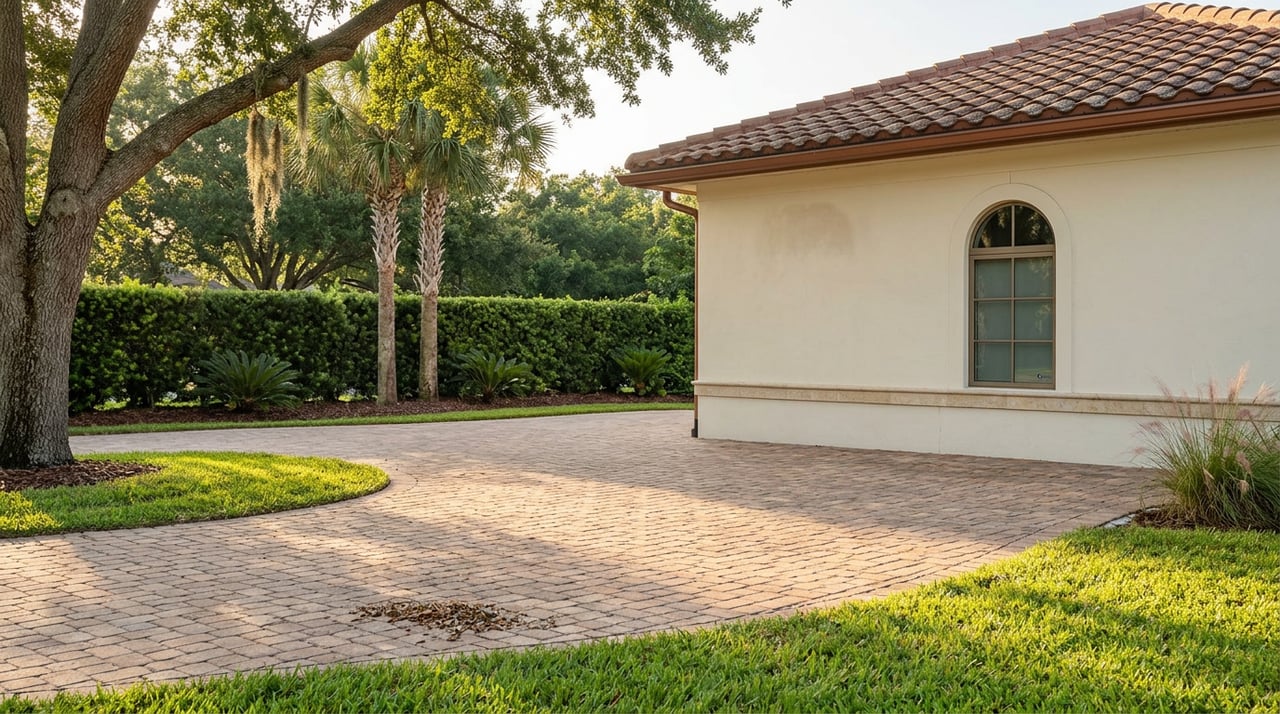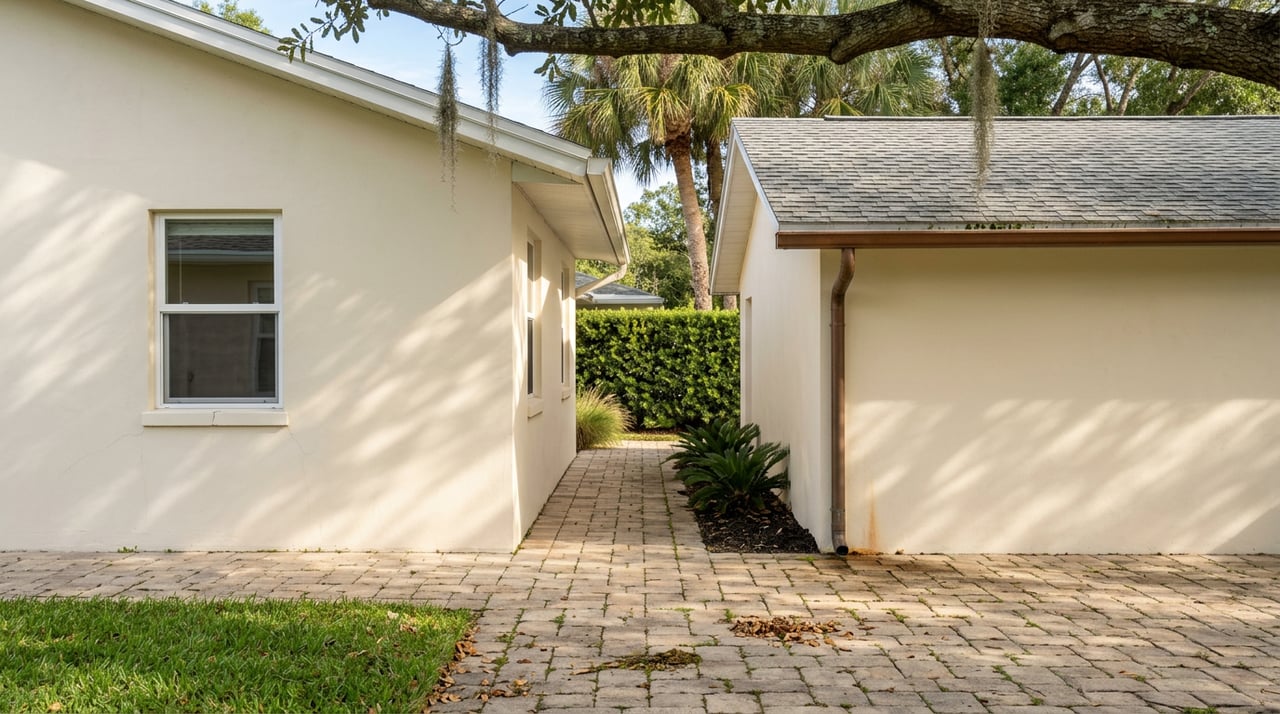
Stand in the driveway of two different Lutz homes, priced within a few thousand dollars of each other, and you could be looking at completely different closings. One needs a septic inspection, a drain field dye test, and a well water test before anyone signs off on financing. The other needs neither, because the water and sewer lines already run to the county main. Nothing on the listing sheet tells you which house you're standing in front of.
That gap is the thing most buyers moving into Lutz from a city-water suburb never see coming, and it matters more here than almost anywhere else in Tampa Bay.
Same Price, Two Different Diligence Lists
Lutz spans four ZIP codes, 33548, 33549, 33558, and 33559, straddling the Hillsborough and Pasco county line. Inside those ZIP codes sit at least three distinct utility eras, and a buyer's due diligence list changes depending on which one a listing falls into.
The oldest layer is the historic village core, built up around the original Lutz Junction rail depot at U.S. 41 and Lutz-Lake Fern Road, along with the lakefront pockets around Lake Park, Lake Keystone, and the northern edge of Lake Magdalene. Homes here date to the 1950s through 1970s, sit on larger lots, and in many cases still run on private well and septic even in stretches where a county sewer main now runs down the street. The infrastructure simply predates the hookup.
The middle layer is the 1980s and 90s wave of master-planned communities, including Cheval, Calusa Trace, and Carpenter's Run. Carpenter's Run has its own footnote in local history: part of the neighborhood, on Tinsmith Circle, was a filming location for Edward Scissorhands, and the production even gets a nod in the credits. These communities were largely built on county water and sewer, but they also landed squarely in the era when Tampa Bay builders used polybutylene supply piping, a material that has since become a known source of failures decades later.
The newest layer is the current generation of master-planned development, places like Long Lake Ranch and Stonebrier, built with full municipal water and sewer from day one.
A buyer comparing a 1970s ranch near Lake Park against a similarly priced newer build in Stonebrier is not comparing two versions of the same transaction. One comes with a septic and well line item. The other doesn't.
Why The Ground Under Lutz Makes This Non-Negotiable
In most Tampa Bay suburbs, a septic system on an older lot is a minor diligence item. In Lutz, it deserves closer attention, because of what's underneath the soil.
Much of Lutz sits on limestone close to the surface, paired with a naturally high water table. That combination limits how well the ground can filter wastewater before it reaches groundwater, which is exactly the job a septic drain field is supposed to do. Add mature live oak canopies, a defining feature of Lutz's older lots, and you get a second problem: oak root systems that can work their way into pipes, tank walls, and drain field lines over years.
None of this means an older Lutz home with a well and septic system is a bad buy. Plenty of them function perfectly well for decades. It means the inspection has to actually happen, and has to be done by someone who understands the local soil and water conditions, not just by checking a box.
The Timing Nobody Mentions
Here is the part that surprises even buyers who know to ask for a septic inspection: timing changes the result.
Florida's rainy season typically runs from roughly June through September, driven by daily sea-breeze thunderstorms rather than the cold fronts that bring winter rain. During those wet months, the water table across much of Central Florida rises, sometimes several feet, compared to the dry season. A septic drain field that shows no problems during a March inspection can show wet-season saturation by September, because the field is now working against a higher water table with less room to filter effluent before it reaches groundwater.
August, when a lot of Lutz buyers are touring homes right now, sits in the middle of that window. An inspection performed today is arguably a tougher test of the system than one performed in the dry season, which is either good news or bad news depending on how the system performs. A pass in August tells you more than a pass in February would.
A dry season pass is not a wet season guarantee, and in Lutz, the difference is the whole point of the inspection.
What The Inspection And Testing Actually Cover
Florida doesn't require a septic inspection at the state level before a home sale, but most lenders do, and any buyer's agent working a well-and-septic property in Lutz should insist on one regardless. The Florida Department of Environmental Protection recommends a voluntary inspection and assessment before closing on any home with a septic system.
A thorough inspection typically covers:
- Tank condition – structural integrity, baffle condition, and sludge or scum levels, which determine whether the tank is due for pumping
- Drain field performance – checking for wet spots, standing water, or odor, often confirmed with a dye test that traces whether wastewater is surfacing where it shouldn't
- Distribution box function – confirming wastewater is spreading evenly across the drain field lines rather than overloading one section
- Well and septic setback – Florida requires a minimum separation distance between a well and a septic system, since a failing septic system can contaminate the well it sits near
- Water quality testing – bacteria and nitrate testing on the well, along with checks for iron and sulfur, both common complaints in this part of Tampa Bay
Buyers should also ask whether the system was ever permitted. Unpermitted septic systems exist in older parts of Florida, and finding one during inspection is a far better outcome than finding one when you try to sell the home yourself years later.
Who Pays, And When To Ask
The buyer typically covers the cost of septic and well inspections, since the results protect the buyer's decision to move forward. That said, it's a negotiable line item, and in a market where sellers want to attract offers on an older well-and-septic property, some will offer to pay for it upfront.
The better question for a Lutz buyer isn't who pays. It's when the request goes in. Build the septic and well inspection into your due diligence period from the start, not as an afterthought after the general home inspection comes back clean. A general home inspector may check that fixtures work. A specialized septic and well inspection is a separate service, and in Lutz, it's the one that actually tells you what you're buying.
FAQ
Does every Lutz home have a well and septic system? No. Lutz mixes private well and septic properties, mostly in the historic village core, around Lake Park and Lake Keystone, and on rural acreage, with communities fully on county water and sewer, including newer developments like Long Lake Ranch and Stonebrier. The only way to know for a specific address is to check the property disclosure and utility records directly.
If a house passed a septic inspection last year, do I still need a new one? Yes. Conditions change with the seasons, and a system that passed during the dry season has not been tested against wet season saturation. Request a current inspection during your own due diligence period regardless of past results.
What if the seller refuses to allow a septic inspection? Treat that as a signal, not a formality to skip. A seller unwilling to allow inspection of a well or septic system is asking you to take on an unknown expense. Loop in your agent immediately if this comes up during negotiations.
Buying or selling a home in Lutz means understanding which version of Lutz you're actually in, and matching your due diligence to it. That's exactly the kind of local detail Carr Signature Premier Group walks clients through before an offer ever goes in. If you're comparing homes across Lutz's different utility zones and want a clear-eyed read on what each one actually requires, request a private consultation and home valuation and let's talk through your specific list.