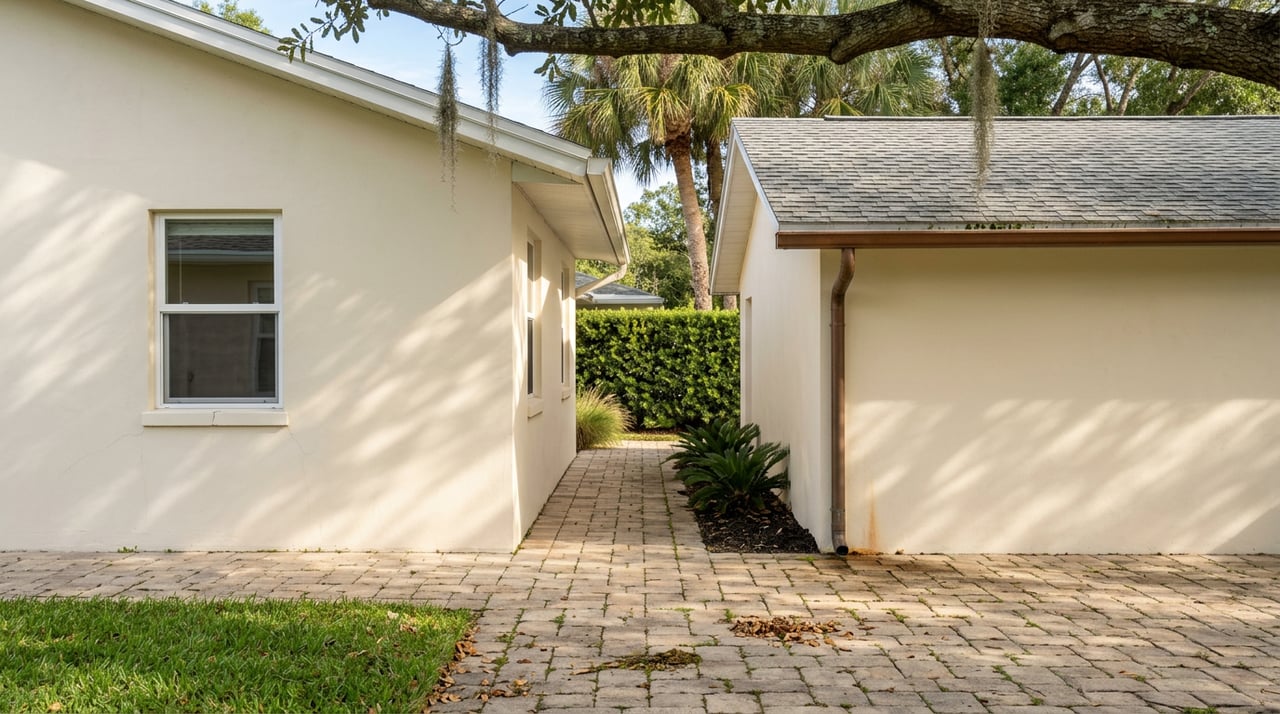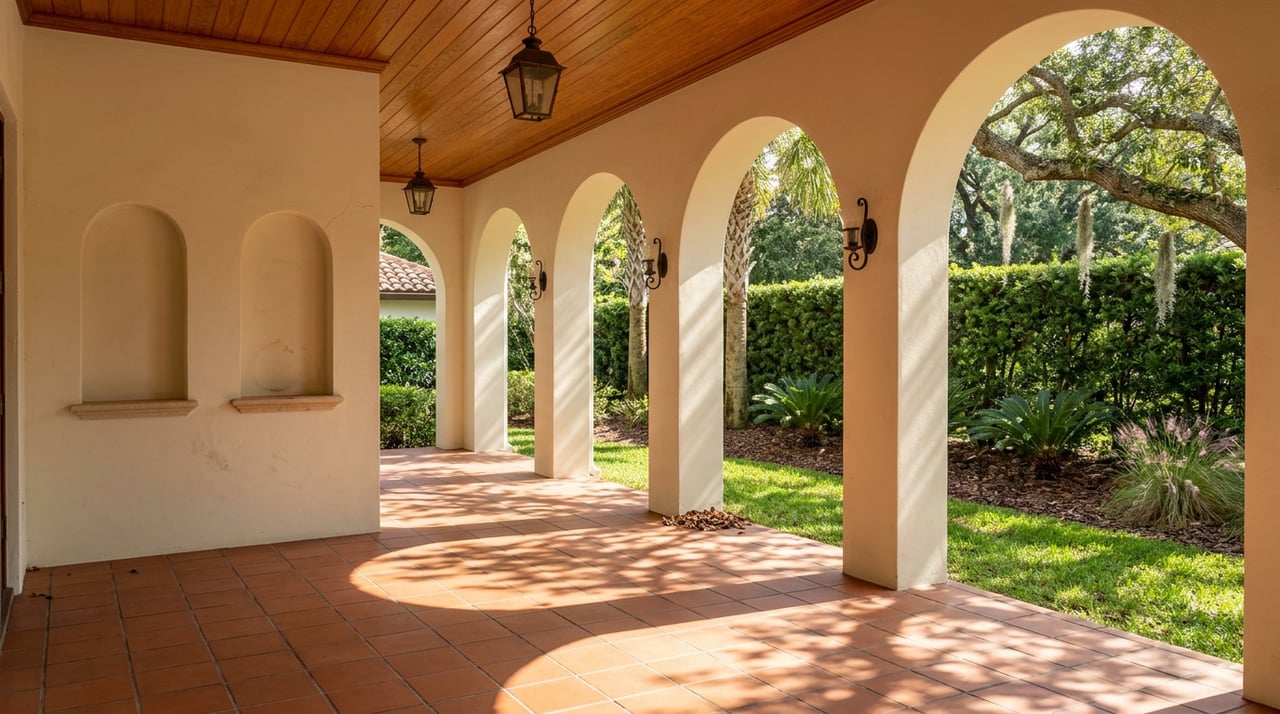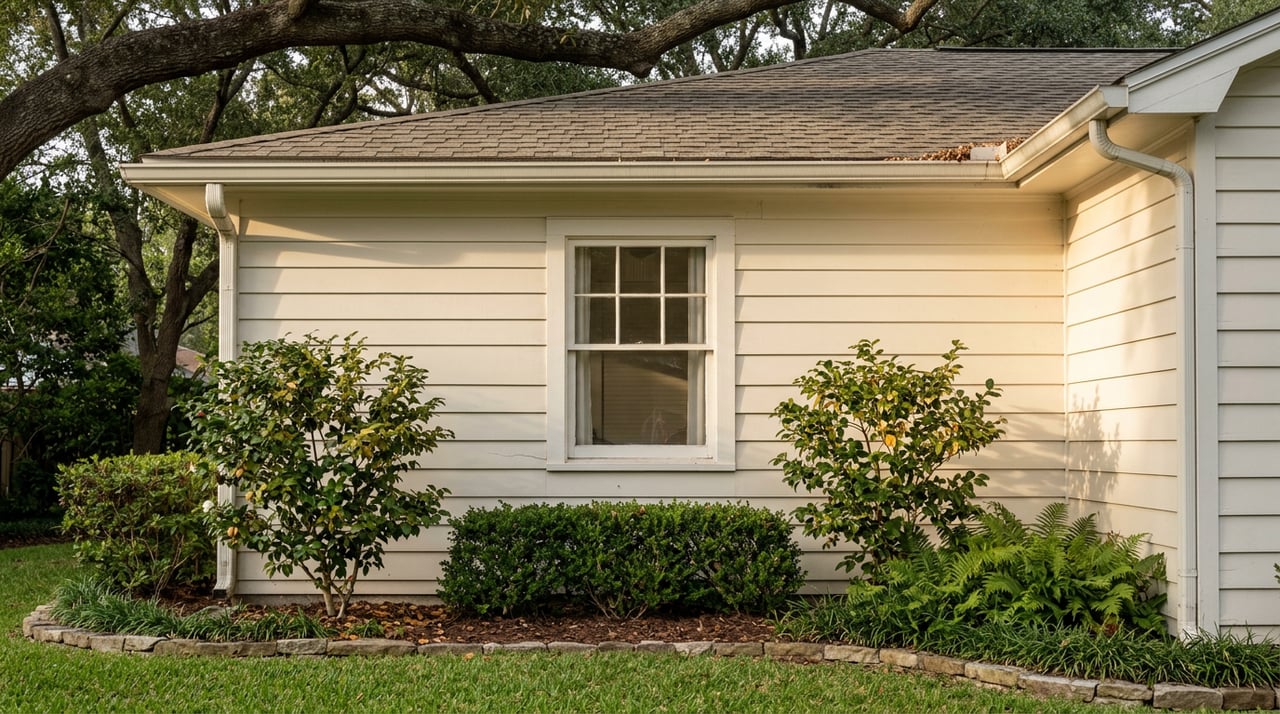
Pull up two Tampa listings priced at $450,000. One is a 1920s bungalow in Seminole Heights with its original wood-frame walls and a roof that's been reshingled once since the Reagan administration. The other is a newer build in a subdivision built to post-1990s wind codes, concrete block construction, hip roof, hurricane straps documented on file. Same price. Same square footage, close enough. The mortgage payment on both looks identical on a lender's worksheet.
It isn't. The gap shows up the moment you request an insurance quote, and it can run into the thousands of dollars a year, which is exactly the kind of number that never makes it onto the listing sheet.
The Median Price Only Tells Half the Story
As of August 10, 2026, Tampa's median sale price sits around $440,000, up 1.2 percent from a year earlier, with roughly 3.7 months of housing supply and about 31 percent of Hillsborough County listings showing a price cut, according to MLS-based tracking. Federal data backs the same broad picture: the median listing price for the Tampa-St. Petersburg-Clearwater metro was $397,450 in July 2026.
Those numbers describe what a house costs to buy. They say nothing about what it costs to keep. In Florida, that second number is not a rounding error. More than half of the homes purchased in Tampa in 2024 were built before 1995, according to Compare.com's analysis of local purchase data, which means the majority of buyers walking into today's market are shopping among homes old enough to trigger a completely different insurance conversation than the one their lender's pre-approval letter assumed.
Why Tampa's Housing Stock Splits Down the Middle
Tampa's residential construction breaks cleanly into two eras, and the line runs roughly through the 1970s. Before that, wood-frame construction was standard, and the concentration of it sits almost entirely in Hyde Park, Seminole Heights, and Palma Ceia, where Craftsman bungalows and cottages from the 1910s through the 1950s still make up much of the housing stock. After the 1970s, concrete block stucco, known in the insurance world as CBS, became the default, and it dominates most of the rest of the city.
That construction split maps almost exactly onto Tampa's current price divergence. A recent South Tampa market update from a local brokerage broke the peninsula into three zip codes, and the pattern is instructive even without repeating their branded analysis: 33629, covering Palma Ceia, Virginia Park, and Golf View, has kept climbing, up close to 15 percent year over year, driven by the A-rated school corridor around Plant High School. Meanwhile 33611, covering Ballast Point and the Westshore Marina District, has split into what amounts to two separate markets: newer elevated construction that sells fast, and older bungalows that sit longer, weighed down by insurance costs. That same report noted South Tampa bungalow owners are seeing annual premiums between $4,000 and $8,000, a number that pushes some buyers toward newer construction regardless of what the listing price says.
Here's what that looks like side by side on paper:
| Pre-1970s wood-frame bungalow | Post-1990s CBS construction | |
|---|---|---|
| Typical location | Hyde Park, Seminole Heights, Palma Ceia | Most of Tampa built after the 1970s |
| Roof-to-wall attachment | Often toenail, the weakest rated connection | Clips, double-wraps, or structural connectors |
| Roof shape | Frequently gable or combination | Frequently hip |
| 4-point inspection | Required by most carriers past 20 years old | Not yet required on newer builds |
| Typical annual premium (South Tampa example) | $4,000 to $8,000 | Meaningfully lower, per the same local reporting |
The gap is not really about age for its own sake. It's about what specific, documentable features an insurer can verify.
The Form That Actually Decides Your Premium
Florida law requires insurers to give credit for wind-resistant construction features, but that credit does not appear automatically. It gets triggered by a single document called the Uniform Mitigation Verification Inspection Form, known by its state code OIR-B1-1802. A licensed inspector walks the home, documents roof covering, roof deck attachment, roof-to-wall connections, and opening protection, and submits the form to the carrier. The Florida Office of Insurance Regulation adopted a revised version of that form, effective for any inspection performed on or after April 1, 2026, based on an updated wind-loss study.
The form is valid for up to five years if nothing on the home changes, but it does not transfer from seller to buyer. A new owner needs their own report, or a seller's report that is current and unaltered. Most buyers never think to ask for it before closing, and most agents never mention it, which means a lot of Tampa buyers close on a home, get an insurance quote, and simply accept the undiscounted rate because nobody submitted the paperwork that would have lowered it.
Two features on that form matter more than people expect. Roof-to-wall attachment ranges from toenail, a single angled nail, up through clips and double-wraps to full structural connectors, and many Tampa Bay homes built before 1995 only have the weakest option. Roof shape matters just as much: a gable roof, with its triangular end walls, takes up to 40 percent more wind pressure than a hip roof at the same wind speed, and older Hillsborough bungalows are far more likely to have gable or combination geometries than the hip roofs common in newer subdivisions.
What Roof Age Actually Triggers
Roof age is the single biggest lever in a Florida premium, and it works on a hard cutoff. Most carriers will not write a new policy on a roof older than 15 years, and some draw the line at ten. Florida Statute 627.7011 protects homeowners with roofs under 15 years from being non-renewed solely on age, but once a roof crosses that line, an inspection confirming at least five years of remaining useful life becomes the only way to avoid non-renewal or a shift to actual cash value coverage, which pays out depreciated value rather than replacement cost.
Age also triggers a separate document: the 4-point inspection, generally required once a home passes 20 years old, covering roof, electrical, plumbing, and HVAC. This is where older Tampa homes run into their sharpest friction. Homes with aluminum wiring or outdated Federal Pacific or Zinsco electrical panels can be denied coverage outright. Polybutylene plumbing, common in homes from the 1970s and 1980s, is treated as a red flag by most carriers. None of this shows up in a walkthrough. It shows up in a report, and it shows up after an offer is already in.
There is real money on the other side of this too. Florida's insurance market has genuinely loosened since the depths of the 2022 crisis. Regulators approved an average 8.7 percent statewide rate decrease for Citizens Property Insurance starting with spring 2026 renewals, and the state has approved 20 new private carriers backed by roughly $850 million in fresh capital since the crisis began, according to reporting picked up by local brokerages tracking the Florida Office of Insurance Regulation's announcements. That competition helps every buyer. It helps far more, though, if the home already has the paperwork that lets an insurer apply the credit in the first place.
What This Means When You're Comparing Neighborhoods
If you're weighing a Seminole Heights bungalow against a newer build elsewhere in Tampa at the same price point, the honest comparison isn't the sale price. It's the sale price plus the insurance quote, run before you write the offer rather than during the due diligence window when you've already fallen for the house.
Practically, that means three things. Ask the seller for a current wind mitigation report before you make an offer, not after. If none exists or it's more than five years old, budget $75 to $200 to order your own during your inspection period, ideally bundled with your 4-point inspection to save a second inspector's trip. And treat roof age as a negotiating point, not a footnote: a roof approaching 15 years old is not just a maintenance question, it's an insurability question that can change your real monthly payment by hundreds of dollars.
The median price gets a home in front of you. What the insurer sees on that OIR-B1-1802 form decides what it actually costs to keep.
Frequently Asked Questions
Does a seller's wind mitigation report automatically transfer to me as the buyer? No. The report belongs to the property's insurance history, not the transaction. If the seller's report is current, under five years old, and nothing structural has changed, most carriers will accept it. Otherwise you'll need your own inspection.
How old can a roof be before a Tampa insurer won't write a new policy? Most carriers set the cutoff at 15 years, and some at 10. Past that point, you'll typically need an inspection confirming at least five years of remaining useful life to avoid a denial or a shift to actual cash value coverage on the roof.
Is a wind mitigation inspection required to close on a home in Tampa? No, it's not a closing requirement. It's a documentation step that determines whether your insurer applies the credits Florida law requires them to offer for wind-resistant features. Skipping it means paying the undiscounted rate by default.
If you're weighing a historic bungalow against new construction anywhere in Tampa, the numbers on the listing sheet are only the starting point. Carr Signature Premier Group can walk you through what a specific property's construction era and roof history actually mean for your carrying costs before you write an offer. Request a Private Consultation & Home Valuation to get the full picture, not just the median.